
Faith & Church
Bible Activities for Kids: Helping God's Word Travel Beyond the Lesson
August 13, 2026·12 min read
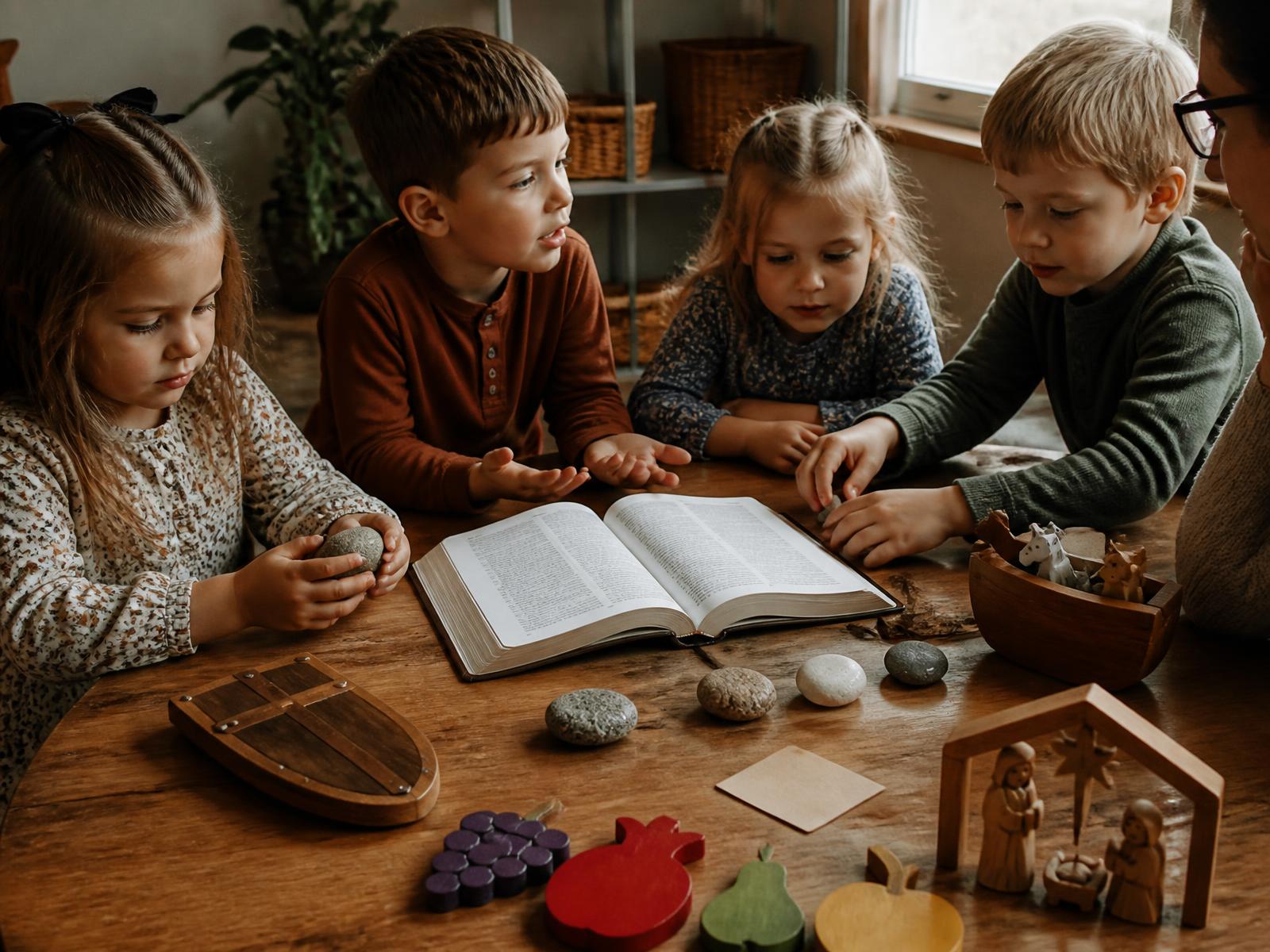
There is something I keep coming back to when I think about teaching children the Bible: what happens to the lesson after the lesson is over?
We can tell a beautiful Bible story. We can have the children answer questions, color a page, make a craft and recite a memory verse. Then everyone goes home. By Tuesday, how much of Sunday's lesson is still with them?
That's the question that interests me. Because I don't want children simply collecting Bible stories in their heads. I want them beginning to understand who God is, what His Word says, why it matters — and how that truth meets them in their everyday lives. That's where Bible activities for kids can become something much more meaningful than a way to fill the last fifteen minutes of class. Done thoughtfully, hands-on Bible learning gives children another way to see the truth, touch the lesson, talk about it, remember it and come back to Scripture again. And sometimes the smallest reminder can bring an entire lesson back.
What are Bible activities for kids?
Bible activities for kids are age-appropriate experiences that help children understand, remember and apply what they're learning from Scripture through active participation.
- Holding five stones while exploring David and Goliath
- Matching pieces of the Armor of God with their meaning
- Working through real-life examples of the Fruit of the Spirit
- Building or sequencing the story of Noah's Ark
- Exploring the people and events surrounding the birth of Jesus
- Learning John 3:16 through an activity centered on God's love and the gift of His Son
- Practicing a memory verse
- Creating a take-home Scripture reminder
The activity isn't the lesson
Scripture is where we begin. The activity should help illuminate, reinforce or bring children back to what they're learning in God's Word.
That's the difference between doing something that happens to have a Bible theme and creating a genuine Bible-learning experience.
Kids can handle more than we sometimes give them credit for
Children love animals. They love giants. They love swords and shields. They love Christmas. They love bright colors and things they can build. There is nothing wrong with using those things to capture their attention. But we shouldn't stop there.
Noah's Ark is about more than animals walking two-by-two. David and Goliath is about more than a little boy beating a big giant. The Nativity is about far more than a baby in a manger. And the Armor of God isn't simply six cool pieces of armor children can memorize.
Behind those memorable images are enormous truths about God. Our job isn't to make Scripture shallow enough for children. It's to help make biblical truth understandable without removing its meaning. That gives us a very different starting point for children's Bible activities.
Armor of God: what does it mean to stand?
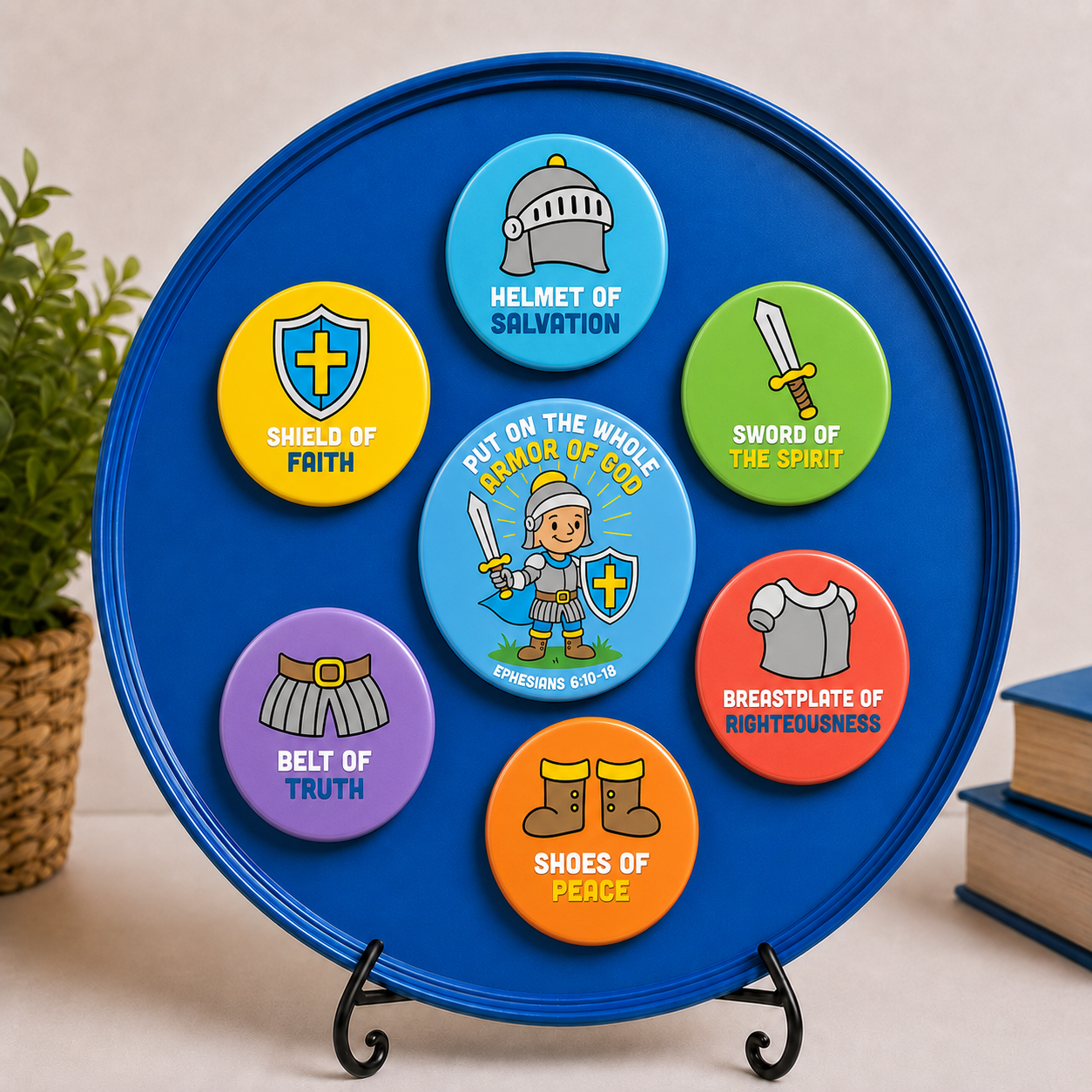
Children usually remember the armor. The helmet. The shield. The sword. But Ephesians 6:10–18 isn't primarily a costume lesson. Paul repeatedly talks about standing.
The Belt of Truth, Breastplate of Righteousness, Shoes of the Gospel of Peace, Shield of Faith, Helmet of Salvation and Sword of the Spirit give us visual ways to begin conversations about some very big biblical ideas.
Instead of only asking "Which piece comes next?" we can ask: What is faith? Why would Paul compare faith to a shield? What does God's truth help us do? Now the child isn't simply identifying armor. They're beginning to understand why Paul used it.
David and Goliath: look past the giant
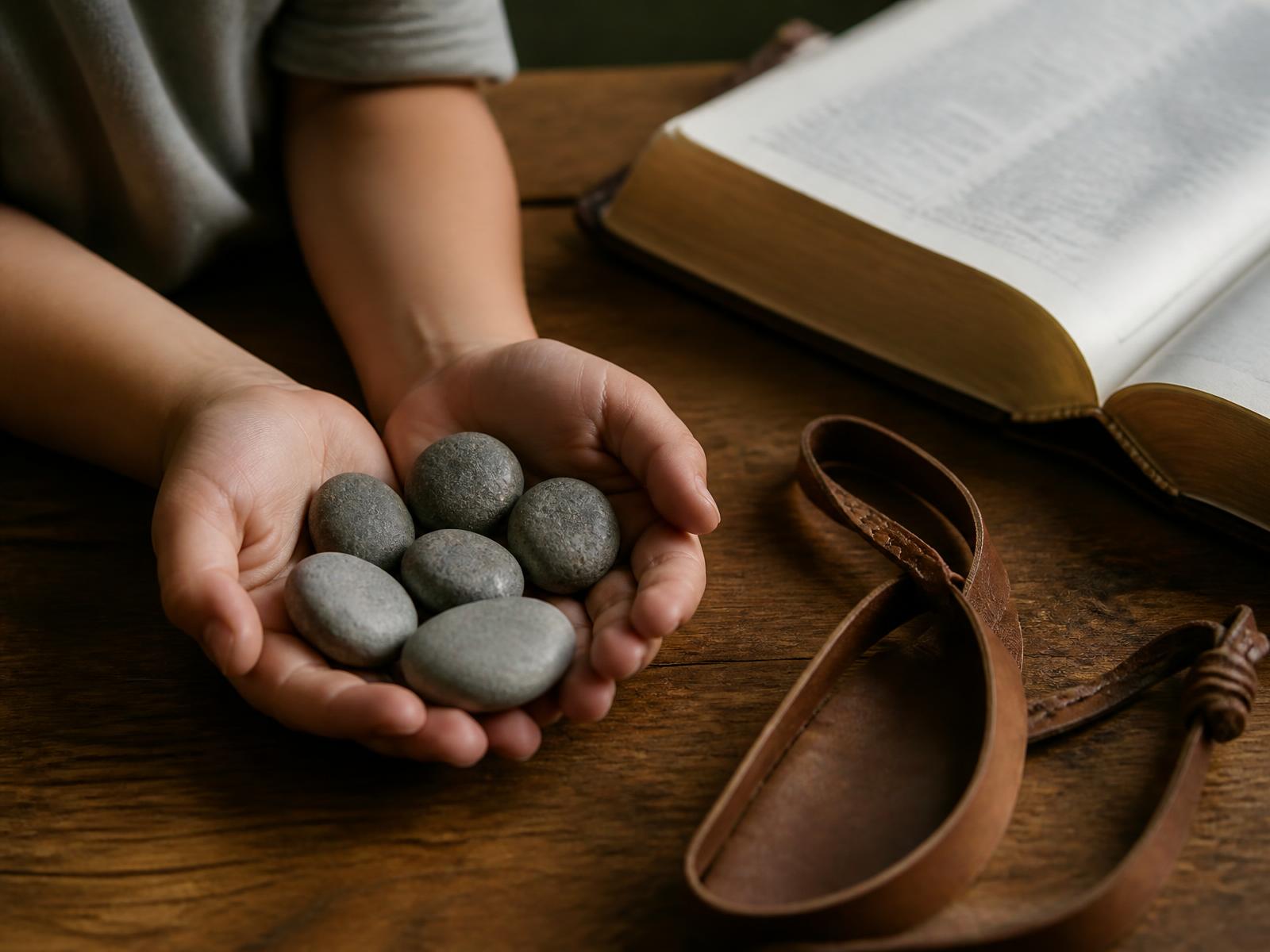
Five stones. A sling. One enormous giant. Those are usually the details children remember. But read 1 Samuel 17 again and listen carefully to David. He isn't talking about how powerful he is. He's talking about God.
David tells Goliath: "…that all the earth may know that there is a God in Israel." — 1 Samuel 17:46, NKJV
That's where the story becomes much richer. A hands-on David and Goliath activity might place five smooth stones in a child's hands — but then use those stones to start conversations about remembering, trusting, courage, truth and giving God the glory. That's part of what Kids Like David is about. Not teaching children to pretend their giants aren't big. Helping them learn that God is greater.
Fruit of the Spirit: more than nine words to memorize
Love. Joy. Peace. Patience. Kindness. Goodness. Faithfulness. Gentleness. Self-control. Children can memorize Galatians 5:22–23. But memorization gives us a starting point, not necessarily the finish line.
What does patience look like when your brother takes something without asking? What might kindness look like when a new child walks into Sunday school alone? What does self-control look like when you're angry?
And perhaps most importantly: why does Scripture call these the Fruit of the Spirit? That question helps move the lesson away from "try harder to be good" and toward a deeper conversation about the work of the Holy Spirit in the lives of God's people.
Noah's Ark: don't let the animals become the whole story
Noah's Ark may be one of the easiest Bible stories to turn into an adorable children's activity. Giraffes. Elephants. Lions. Rainbows. An enormous boat. There's plenty for little hands to work with.
But Genesis 6–9 gives us much more to talk about. Noah listened to God when what God told him to do required extraordinary trust and obedience. There is judgment in this story. There is rescue. There is God's covenant. And there is the rainbow — not merely as colorful decoration, but as a sign connected to God's promise.
Children don't need every theological detail at once. But even simple activities can begin pointing them toward the actual biblical story, rather than letting the animals become the entire lesson.
The Nativity: don't stop at the manger
The Nativity gives us beautiful imagery. Mary. Joseph. Bethlehem. Shepherds. Angels. A manger. The star and the Magi are also part of the broader biblical account surrounding Jesus' birth. Children naturally respond to these visual elements. But the question underneath all of them is much bigger: who is this baby?
Luke tells us the angel announced: "For there is born to you this day in the city of David a Savior, who is Christ the Lord." — Luke 2:11, NKJV
That's where a Nativity activity can become more than a Christmas craft. We can help children understand that Christmas isn't ultimately about the manger itself. It's about Jesus. The Savior came. That's the truth we want the beautiful pieces of the story to keep pointing toward.
God so loved the world: a verse children can grow into
John 3:16 may be one of the first Bible verses many children learn: "For God so loved the world that He gave His only begotten Son…" It's familiar. But familiar doesn't always mean understood.
What does it mean that God loved? What did He give? Who is His Son? What does it mean to believe in Him? What is everlasting life? Those are enormous questions inside one familiar verse.
A God So Loved the World Bible activity can help children slow down and explore the verse instead of racing through words they've learned to repeat. The goal isn't simply: can you say John 3:16? It's eventually: do you understand what this verse is telling you about God and Jesus? That's a very different kind of learning.
What does hands-on Bible learning actually look like?
It doesn't have to be complicated. It doesn't require turning every Bible lesson into an elaborate Pinterest project. Sometimes it's remarkably simple. A stone in a child's hand. A shield they can hold. A piece they can match. A Bible verse they can place in order. A question around the dinner table. A magnet they see on the refrigerator three mornings later.
What matters is the connection. One simple framework I use when thinking about these activities is: Learn It → See It → Do It → Remember It.
- Learn It — What does Scripture actually teach? Start there.
- See It — Is there something visual or tangible that helps the child understand the concept?
- Do It — Can the child participate instead of only listening?
- Remember It — What can help this truth come back after the lesson ends?
What happens on Tuesday?
Imagine a child learning about the Shield of Faith on Sunday. They hear the Scripture. They participate in the lesson. They talk about what trusting God means. Then they take home a Shield of Faith magnet connected to Ephesians 6:16.
Tuesday morning, they're standing in the kitchen. There it is. Shield of Faith. The magnet isn't teaching a new gospel. It isn't replacing the Bible. It simply brings something they've already learned back into view.
The same could happen with LOVE from the Fruit of the Spirit, a stone from Kids Like David, a reminder of God's covenant from Noah's Ark, a Nativity reminder pointing back to Jesus the Savior, or John 3:16 from God So Loved the World. That's why I'm interested in Bible magnets and other take-home learning tools. Not because children need more stuff. Because sometimes a physical reminder can reopen a spiritual conversation.
Before choosing a Bible activity, ask these questions
Not every Christian craft is automatically a good Bible-learning activity. Before choosing one, I would ask:
- Does it actually connect to the Scripture we're teaching?
- Can I explain what I want the child to learn from it?
- Does it help clarify the lesson — or distract from it?
- Is it appropriate for the child's age?
- Does the child participate meaningfully?
- Can we connect the activity to real life?
- Will anything about this experience help the child remember the biblical truth later?
Bible activities at home, homeschool, Sunday school and VBS
You don't need a children's-ministry classroom to do this. At home, a Bible lesson might continue through a breakfast conversation or something displayed on the refrigerator.
A homeschool family can connect Scripture with reading, vocabulary, art, history, memory work and hands-on activities. A Sunday-school teacher can choose one purposeful activity that reinforces the day's central truth instead of squeezing in three unrelated crafts. A children's ministry can give families a simple way to continue the conversation at home. And during Vacation Bible School, a take-home activity can help a lesson survive beyond the final day.
Different environments. Same goal: help children come back to God's Word.
Maybe the activity isn't the end of the lesson
Maybe that's the shift. Instead of asking "What activity can we do with this Bible story?" we start asking "How can we help this truth stay with them?"
Sometimes that will involve a craft. Sometimes a conversation. Sometimes five stones. Sometimes a shield. Sometimes a magnet on a refrigerator. And sometimes the best thing we can do is simply open the Bible again and ask one more good question.
Children don't need us to turn God's Word into entertainment. They need us to help them encounter it in ways they can understand. Read it. Talk about it. Put it into their hands when that helps. Bring it home. And keep pointing them back to Jesus. Because the real goal isn't a completed activity. It's a truth remembered when they need it.
How a 3.5-inch photo magnet becomes part of the story
Our custom photo magnets are professionally produced as 3.5-inch round keepsakes. They are big enough to actually see the faces in the picture, but small enough to belong on the refrigerator, the filing cabinet at work, or the side of a metal lamp in grandma's bedroom.
You provide the photograph. We help you make sure the resolution, the crop, and the framing honor the moment. Most people send us a phone photo or a scan of an older print, and we walk them through the rest. The keepsake itself does the work after that — quietly, every day, for years.
How to start
Email tsocustomkeepsakes@gmail.com with a short note about the photograph you want to preserve and the moment behind it. We'll respond with simple next steps — how to send the image, a brief design questionnaire, and information about custom order options.
There is no shopping cart and no checkout. Every keepsake we make begins with a conversation, because every keepsake we make is built around a story.
Your photo. Your story.
Bring the lesson home with Bible magnets kids can hold, sort and keep.
Email Us About Your Photo →Frequently Asked Questions
What are good Bible activities for kids?
+
Good Bible activities are age-appropriate experiences directly connected to the Scripture being taught. They can include object lessons, story sequencing, Scripture memory games, role-playing, matching activities, purposeful crafts, discussion prompts and take-home Bible-learning tools.
How do you make Bible lessons fun without losing the biblical message?
+
Start with the biblical truth first and choose the activity second. Fun can support learning, but the activity should help children understand, discuss or remember Scripture rather than becoming the main event.
What Bible stories are good for hands-on activities?
+
Stories and passages with strong visual elements or practical applications work especially well, including the Armor of God, David and Goliath, Noah's Ark, the Nativity, Fruit of the Spirit and John 3:16. The activity should always remain connected to the meaning of the biblical passage.
How can parents reinforce Sunday-school lessons at home?
+
Keep it simple. Give families the Scripture reference, one meaningful question and something that brings the lesson back into everyday life — a memory verse, discussion prompt, bookmark, activity or visual Scripture reminder.
Can Bible magnets help children remember Scripture?
+
Bible magnets can serve as recurring visual reminders of Scripture or biblical concepts children have already learned. Their value isn't the magnet itself; it's the connection between the physical reminder and the Bible lesson behind it.
Gifts featured in this story
Personalized photo keepsakes made in Yakima, WA — shipped nationwide.
Gifts
Bible Lesson Magnets for Kids
Armor of God and Kids Like David magnet sets — screen-free Sunday school, VBS, and homeschool lessons handmade in Yakima, WA.
Explore →Gifts
Storytelling Magnet Kits
Fridge-first kits kids can build, sort and retell — Noah's Ark, Nativity, Fruit of the Spirit and more.
Explore →Gifts
Homeschool Bible Lessons
Screen-free Scripture activities that fit into a homeschool week.
Explore →Tagged
You might also like
Related moments we help families across the Yakima Valley preserve.
Join the Keepsake List
Preserve Your Moment
Tell us about the photograph you want to turn into a keepsake. We'll respond with simple next steps.
We email about new keepsake ideas, launches, and seasonal stories. No spam. Ever. Unsubscribe anytime from any email. Privacy Policy.